Finding Your Perfect Scooping Schedule
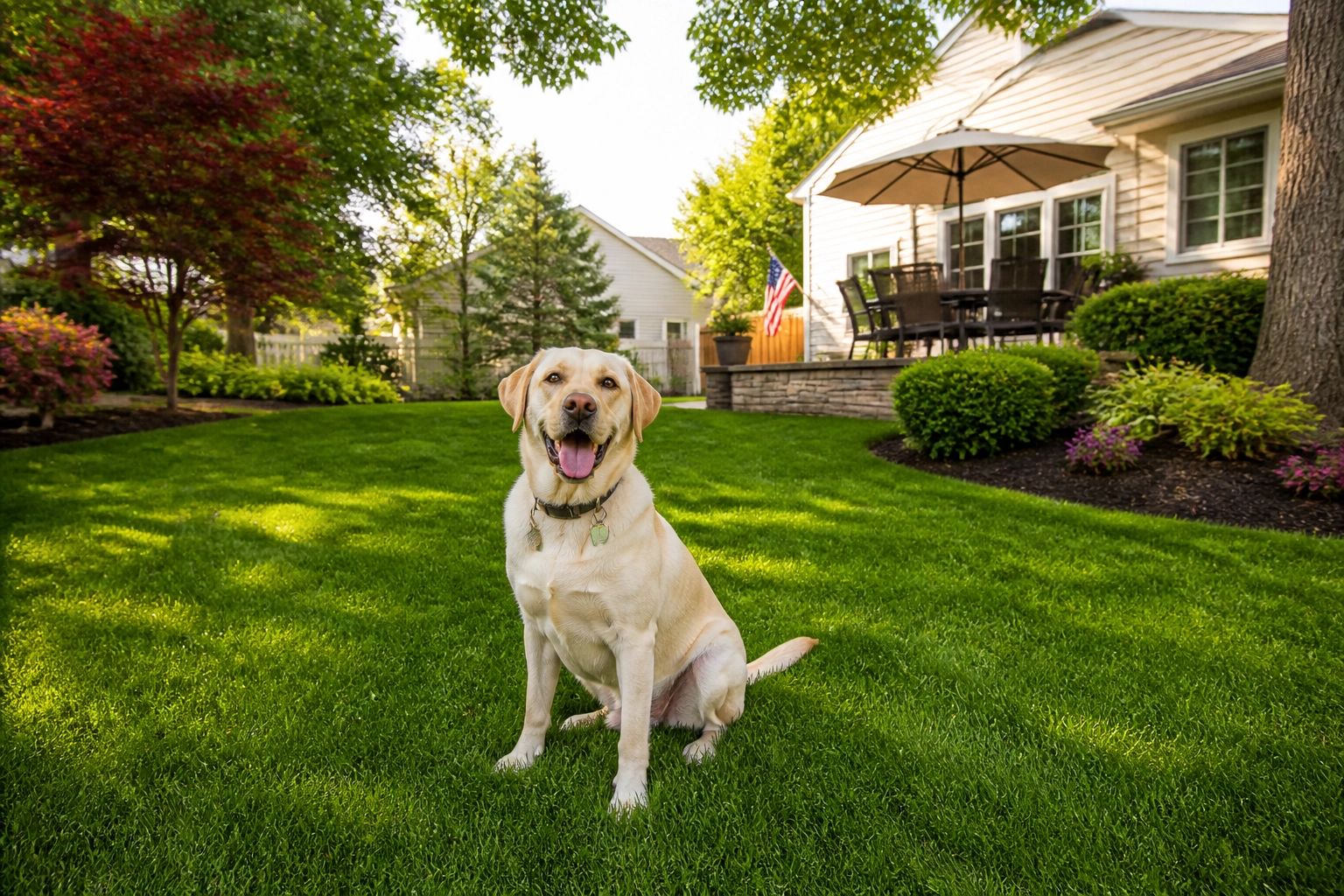
You love your dog. You don’t love the "landmines" they leave behind. Keeping a clean yard is about more than just aesthetics; it is about safety, health, and being able to walk to your grill without doing a tactical dance. But how often do you actually need a pooper scooper service to visit?
The answer isn't the same for everyone. A single Chihuahua in a massive Clifton Park yard has different needs than three Labradors in a cozy Saratoga Springs lot. Finding your perfect rhythm is the key to a stress-free outdoor space.
At DookieDocs, we see every type of yard. We know the math behind the mess. Here is how you can determine the best frequency for your home.
How much waste does one dog produce in a month?
Let’s talk numbers. The average dog poops about two to three times per day. That might not sound like a lot when you’re looking at one small pile. However, it adds up faster than you think.
- Daily: 3 piles.
- Weekly: 21 piles.
- Monthly: 80 to 90 piles.
If you have one dog, you are looking at over 80 potential hazards every single month. If you wait two weeks to scoop, you are navigating 40 piles. That is a lot of waste sitting in the sun, attracting flies, and leaching into your soil.
For most single-dog owners in the Capital Region, weekly dog poop removal is the "Goldilocks" zone. It is frequent enough to prevent buildup but spaced out enough to be highly affordable. Our weekly pet waste removal plan is built around exactly this sweet spot.
The Multi-Dog Challenge: Managing a Pack
When you add a second or third dog, the math doesn't just double, the impact on your yard accelerates. Two dogs mean 40+ piles a week. Three dogs mean 60+.
If you have a "pack" at home, a weekly service is the absolute minimum. Many of our clients with three or more dogs opt for twice-weekly service. Why? Because waste accumulates so quickly that the yard becomes unusable by day four.
Step 01: Count your dogs. Step 02: Observe their habits. Step 03: Choose a schedule that keeps the "grass-to-poop" ratio in your favor.
With multiple dogs, the waste isn't just an eyesore. It’s a health hazard. More dogs mean a higher concentration of bacteria like E. coli and parasites like roundworms. Staying on top of it isn't just about convenience; it’s about protecting your family.
Size Matters: Small Breeds vs. Giants
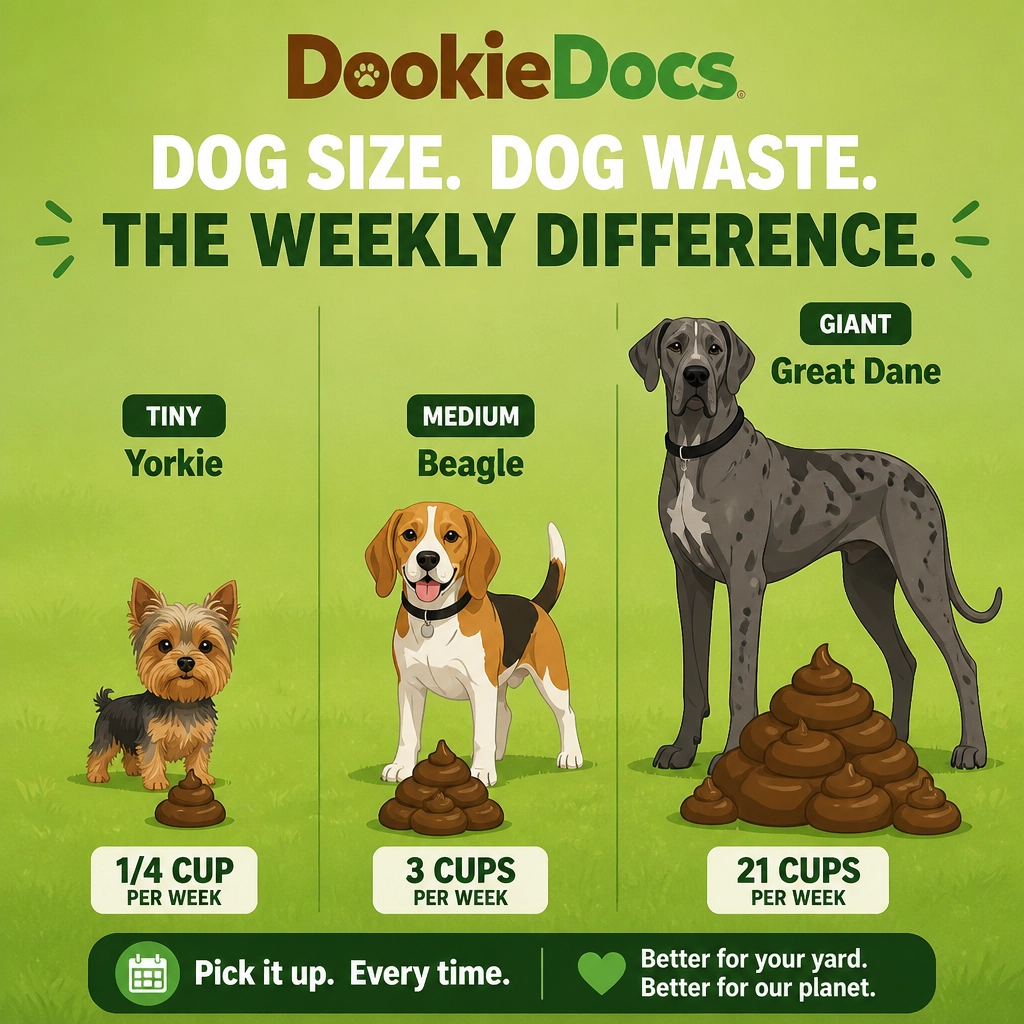
Not all poop is created equal. A Great Dane and a Yorkie might both go twice a day, but the volume is vastly different.
Large breeds (70+ lbs) produce significantly more waste per "sitting." One "giant" dog can often out-poop three small dogs combined. If you own a Mastiff, a Saint Bernard, or a large German Shepherd, your yard requires a heavy-duty approach.
Conversely, small breeds produce smaller, firmer waste. While it’s still unsanitary, it doesn't smother the grass quite as quickly. However, small waste is harder to find. It hides in the blades of grass, waiting for a stray sneaker.
Regardless of size, the rule remains: Consistent removal is the only way to maintain yard health.
Why Consistency is Your Yard’s Best Friend
Your lawn is a living thing. Dog waste is not fertilizer. In fact, it is toxic to your grass. Because it is high in nitrogen and contains acidic compounds, leaving it to sit will result in those dreaded yellow and brown "burn" spots.
- Prevent Grass Death: Removing waste weekly prevents the "burn" from setting in.
- Stop the Smell: In the New York humidity, waste decomposes quickly and smells terrible.
- Break the Cycle: Regular scooping breaks the life cycle of many common lawn parasites.
We believe in a proactive approach. That is why we offer Yard Sanitizing as an add-on. Scooping removes the physical waste, but sanitizing kills the microscopic threats left behind. It’s the difference between a yard that "looks" clean and a yard that "is" clean.
Beyond the Scoop: Sanitizing and Deodorizing
Sometimes, just picking up the waste isn't enough to make your yard feel fresh again. If your yard has a lingering odor, or if you have young children who play on the grass, you need the full treatment.
Our specialized Deodorizing treatments neutralize odors at the source rather than just masking them with heavy perfumes. We also offer Yard Sanitizing to eliminate harmful bacteria and parasites. This is especially important for households with puppies or senior dogs who may have weaker immune systems.
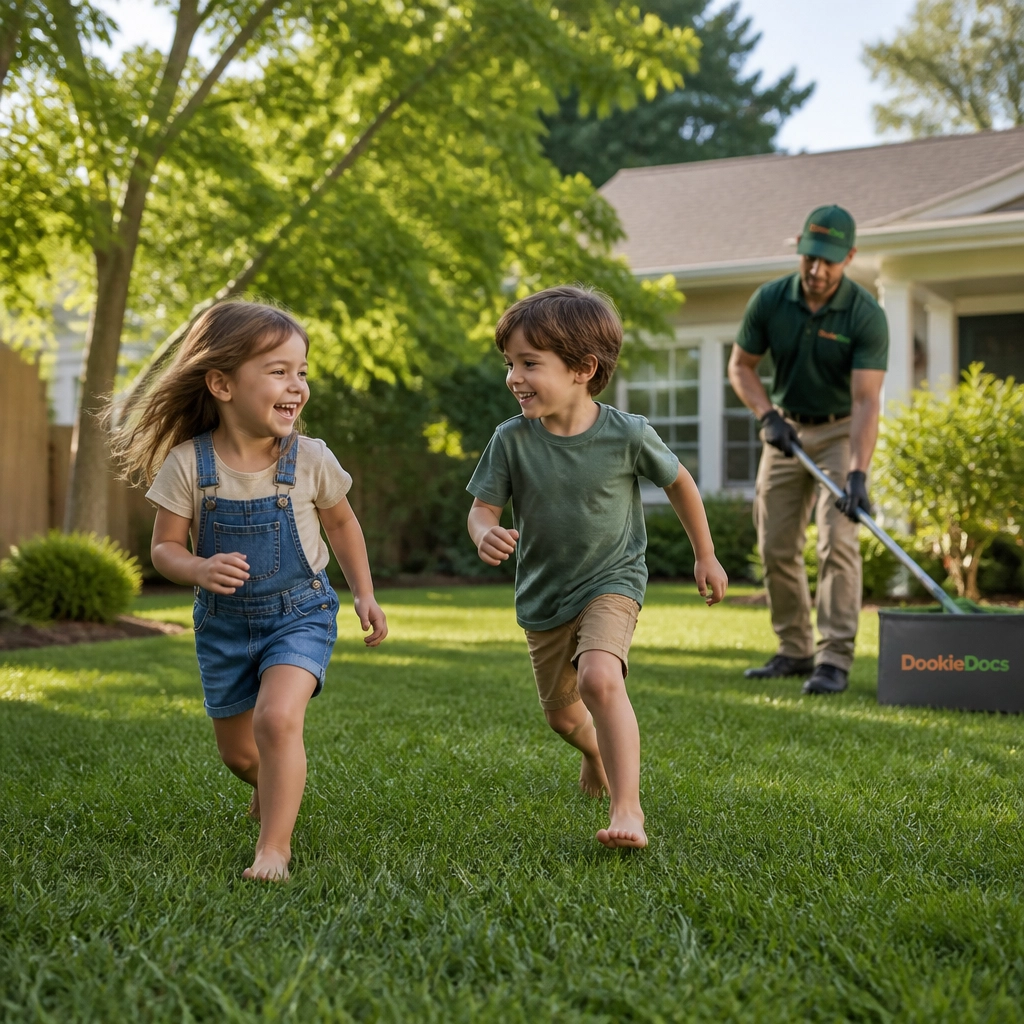
You want a yard where you can host a barbecue without apologizing for the smell. You want a space where your kids can play tag without you worrying about what they might touch. We provide that peace of mind.
Frequently Asked Questions About Scooping Schedules
Do I need to be home when you scoop? No. Most of our clients are at work or running errands. As long as we have access to your yard, we can get the job done. We’ll text you that photo proof as soon as we’re finished.
What happens if it rains? We scoop in most weather conditions, including rain and light snow. If the weather is severe enough to be dangerous, we will reschedule and notify you immediately.
Can you scoop if my dog is in the yard? If your dog is friendly and comfortable with strangers, we are happy to share the yard with them! If your dog is protective or aggressive, we ask that you keep them inside during our scheduled visit.
How do I pay? We offer easy, automated billing. You don't have to worry about mailing checks or finding cash. It’s all handled digitally for your convenience.
Is your sanitizing spray safe for pets? Yes. We use pet-safe, environmentally friendly products that are designed to kill bacteria without harming your furry friends or your grass.