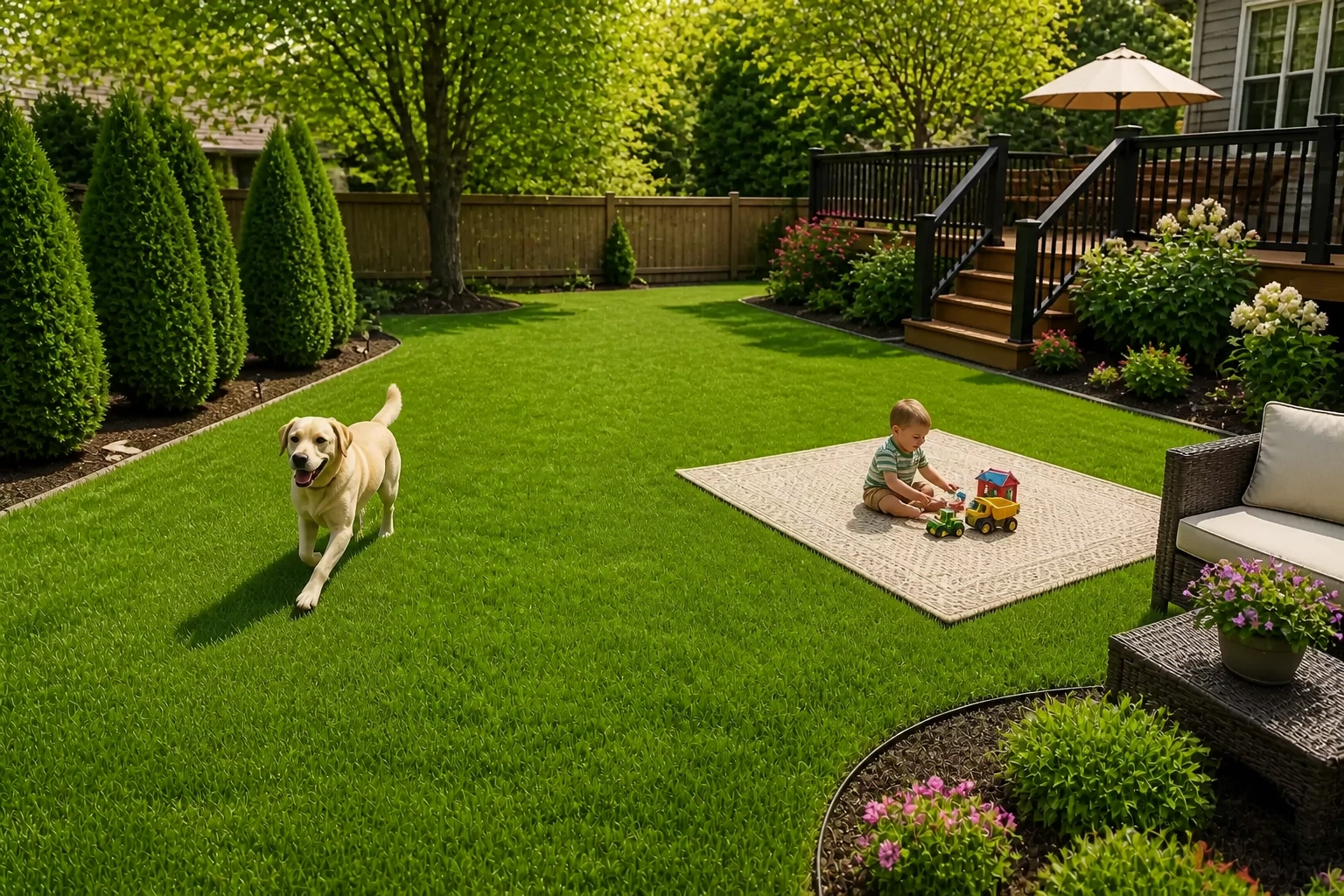
The Truth About Yard Sanitizing
More Than Just a Scoop
You love your dog. You love your yard. But you probably don't love the science project growing in your grass. Most homeowners believe that once the waste is bagged and gone, the job is done. Unfortunately, that is only half the story.
When you scoop dog waste, you are removing the visible problem. What stays behind is the invisible residue, the bacteria, parasites, and viruses that can live in your soil for weeks, months, or even years. This is where yard sanitizing services become essential for a truly healthy home.
At DookieDocs, we see it every day. A yard can look perfectly clean to the naked eye while still being a "hot zone" for pathogens. If your kids play in the grass or your pets frequently wrestle on the lawn, simply "picking it up" isn't enough. You need a solution that goes deeper than the surface — which is exactly what our yard sanitizing and deodorizing service is designed to deliver.
What germs stay in my lawn after I pick up dog poop?
It sounds dramatic, but the biology of dog waste is serious. A single gram of dog poop can contain 23 million coliform bacteria. While your lawn might look green, it could be harboring some very unwelcome guests.
Giardia and Salmonella are two of the most common culprits. These aren't just "stomach bugs" for dogs; they are zoonotic, meaning they can pass from your pets to you and your children. If a toddler sits on a patch of grass where waste was sitting a few days ago, they are at risk.
E. coli is another major concern. It thrives in moist soil and can easily be tracked into your house on paws or shoes. Once it's in your carpet, it's in your living space. By sanitizing the yard, you are creating a frontline defense that keeps these germs outside where they belong.
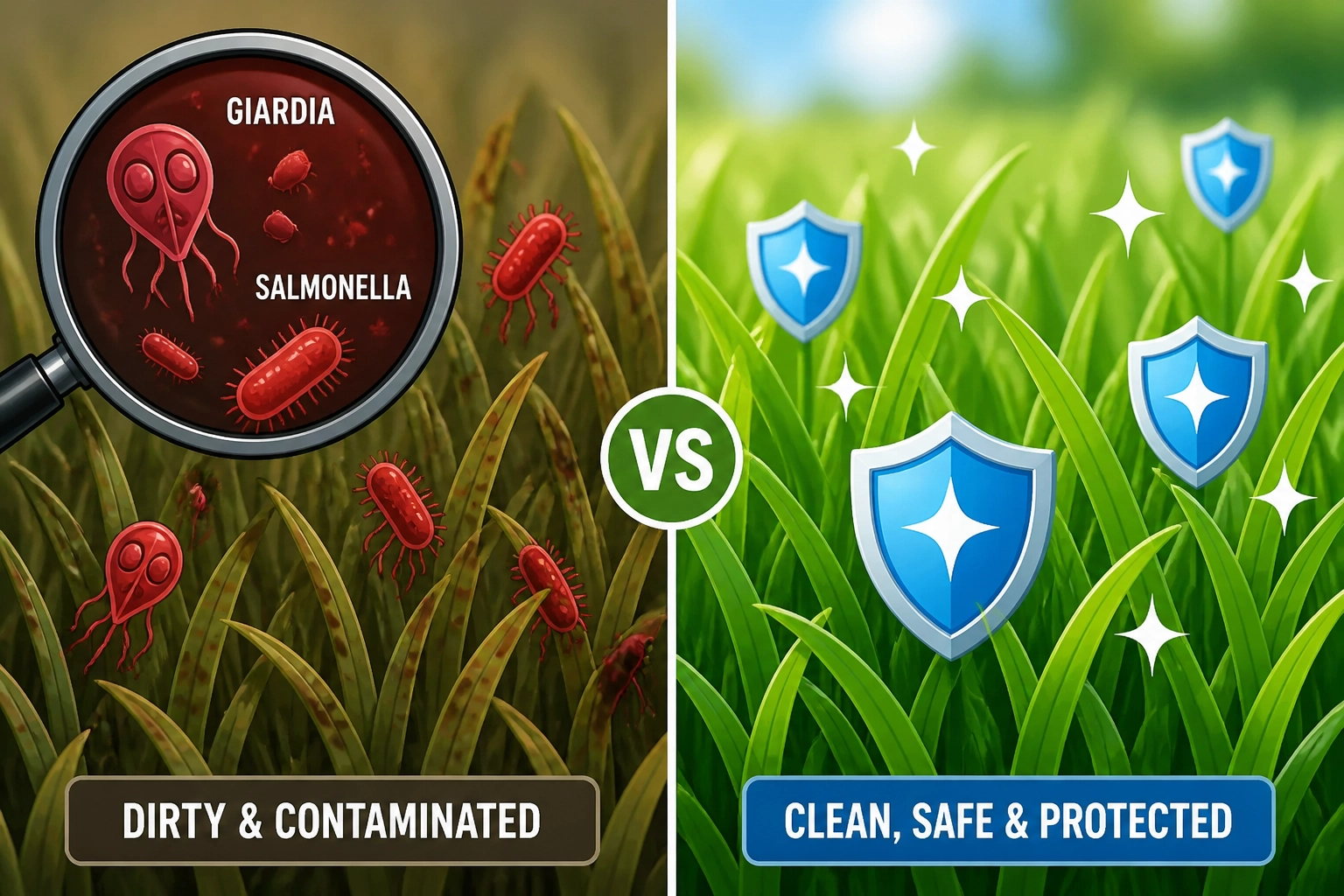
What is the difference between yard sanitizing and deodorizing?
This is the question we get asked most often at DookieDocs. People often use these terms interchangeably, but they serve two very different purposes in yard cleanliness.
Deodorizing is about the nose. It uses professional-grade enzymes to break down the proteins that cause that classic "dog yard" smell. It's perfect for hot summer days when the air gets heavy. It makes your backyard a place where you actually want to host a BBQ again.
Sanitizing is about health. It involves applying a specialized, pet-safe disinfectant that kills the actual bacteria and viruses living on the blades of grass and in the topsoil. While deodorizing makes the yard smell better, sanitizing makes the yard safer.
In a perfect world, you want both. That is why our top-tier service packages often combine these treatments. You get a yard that smells like a fresh spring day and is as clean as a hospital floor.
Common Questions About Yard Sanitizing
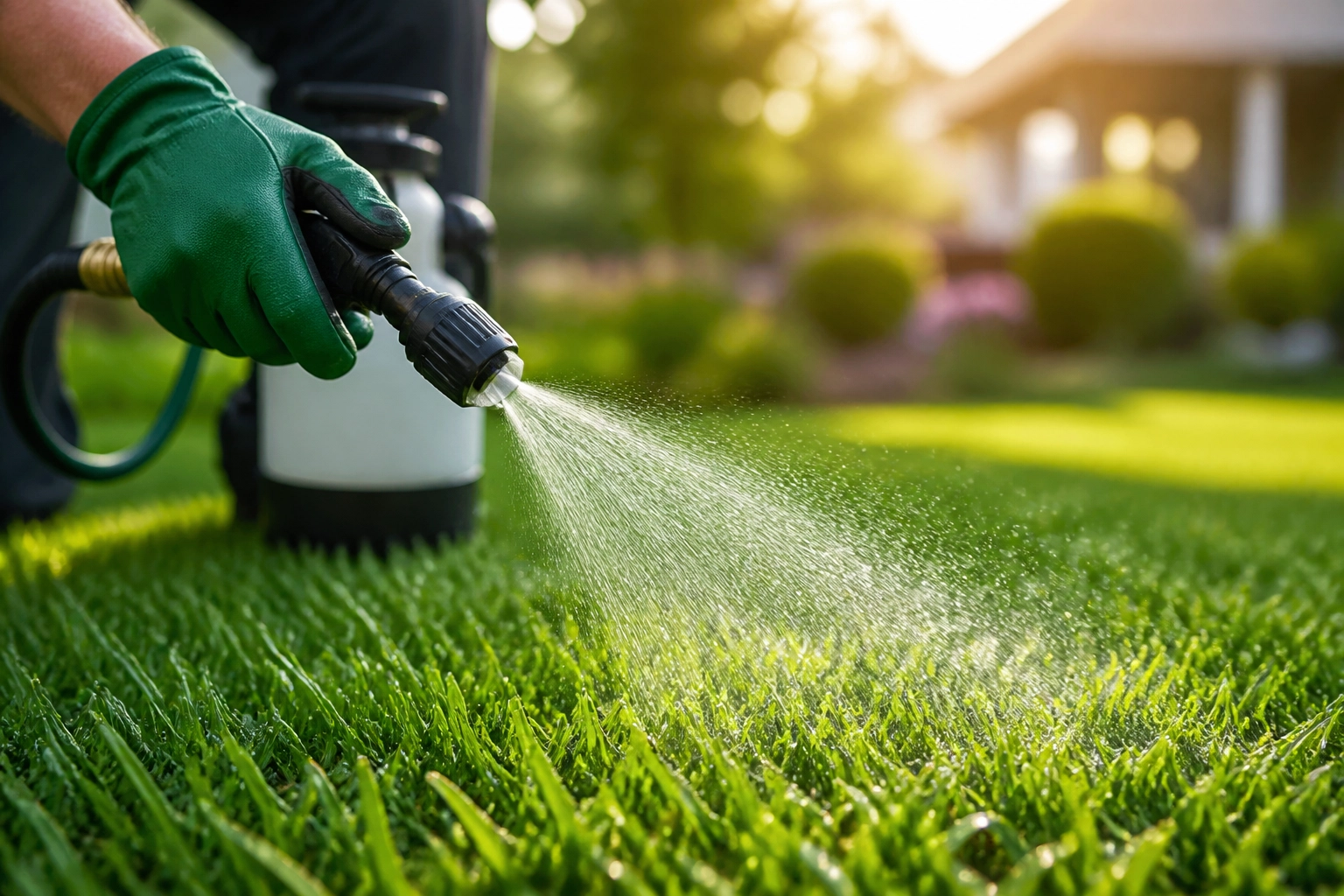
Is the sanitizing solution safe for my pets? Yes. We use professional-grade solutions that are specifically designed for use around pets and children. Once the solution has dried (usually within 15–30 minutes), your dogs can go right back to their favorite spots.
How often should I have my yard sanitized? For most households, a monthly sanitizing treatment is perfect for maintaining a baseline of safety. However, if you have a young puppy that hasn't finished all its vaccinations, or if you have multiple large dogs, you may want to consider bi-weekly treatments.
Does sanitizing kill the grass? Not at all. In fact, removing the nitrogen-heavy waste and the bacteria that comes with it can actually help your grass stay greener and healthier over time.
Do I need to be home when you visit? Nope! As long as we have access to your yard, we can perform the full service while you're out. We’ll send you a text and a photo proof once we’re finished so you have total peace of mind.